Mobile Radiation Barriers vs Lead-Lined Doors vs Lead Curtains
Choosing the Right Radiation Shielding Solution for Your Facility
Selecting the right radiation shielding solution is not just about protection levels. It is also about how the facility operates every day, how flexible the space needs to be, and how the setup may evolve in the future.
Hospitals, diagnostic centres, nuclear medicine departments, and industrial facilities often face challenges when shielding systems are selected without considering workflow, installation limitations, future modifications, or operational practicality.
The three most commonly used shielding solutions today are:
Lead-Lined Doors
Mobile Radiation Barriers
Lead Curtains
Each serves a different purpose, and the right choice depends on factors such as radiation exposure, room layout, flexibility requirements, budget, and long-term usage plans.
At Almatin, radiation shielding systems are designed not only for compliance and safety, but also for real-world operational efficiency and long-term reliability.
Lead-Lined Doors: Reliable Protection for Permanent Radiation Rooms
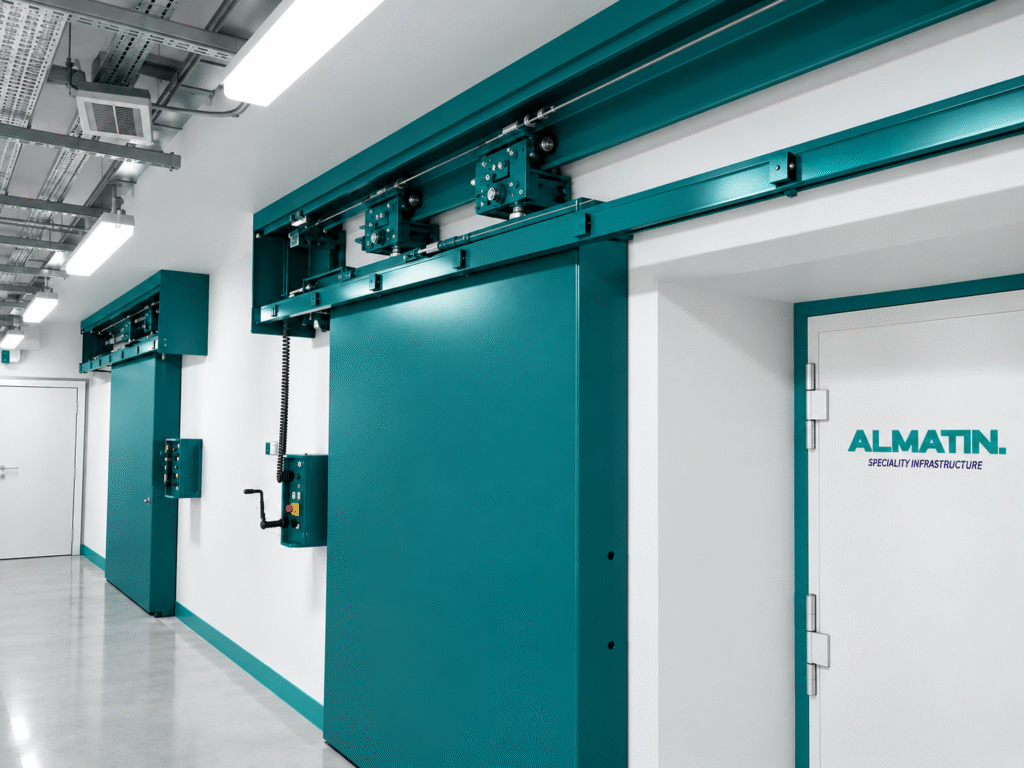
Lead-lined doors are considered one of the most dependable solutions for permanent radiation environments such as X-ray rooms, CT suites, fluoroscopy labs, and nuclear medicine facilities.
Because these doors become part of the building structure, they provide a fixed and continuous shielding barrier that does not rely on repositioning or manual handling.
They are especially suitable for facilities where room layouts are permanent and long-term inspection reliability is important.
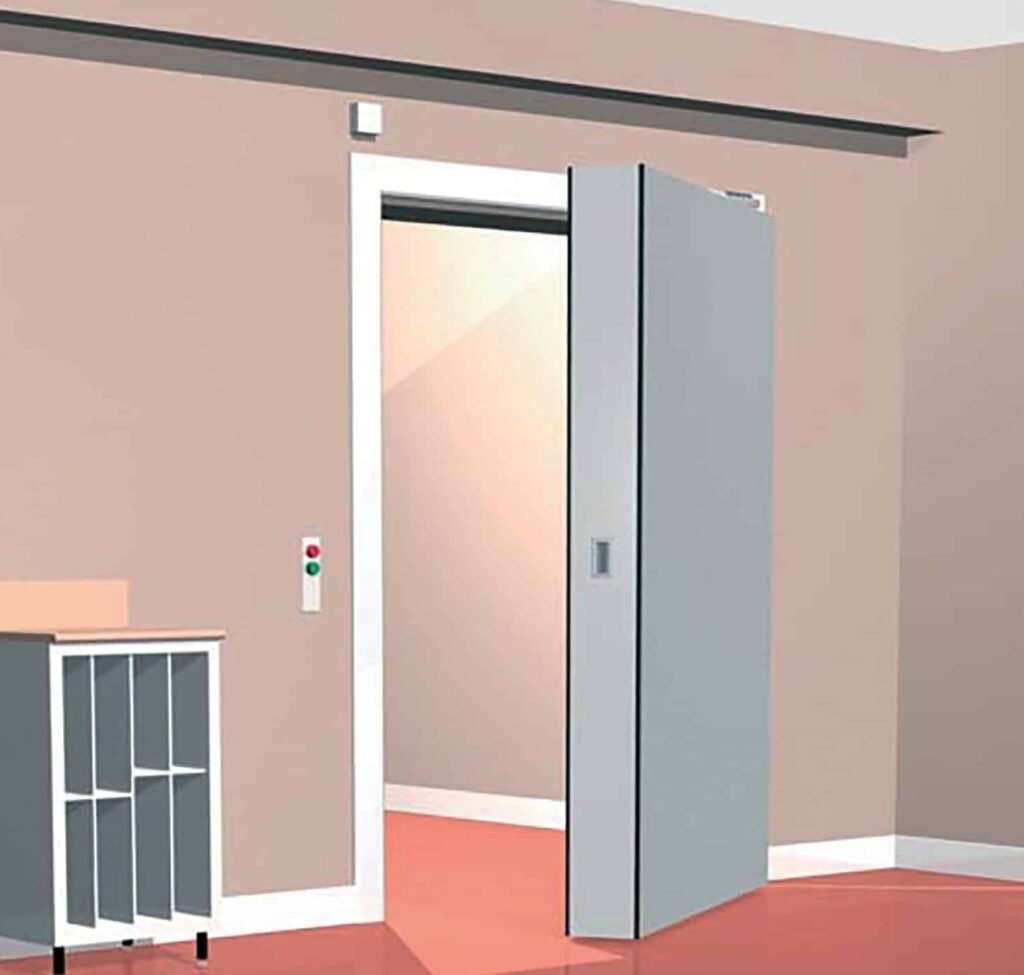
Another major advantage is their seamless architectural integration. Modern lead-lined doors can match the room finish while also incorporating lead-lined frames and lead glass vision panels for improved visibility and protection.
However, proper installation is critical. Misalignment between doors, walls, frames, or hardware openings can create leakage risks and expensive corrections later in the project.
Although lead-lined doors involve higher upfront costs and cannot easily be relocated, they remain the preferred long-term solution for stable radiation environments.
Mobile Radiation Barriers: Flexible Shielding for Dynamic Workspaces
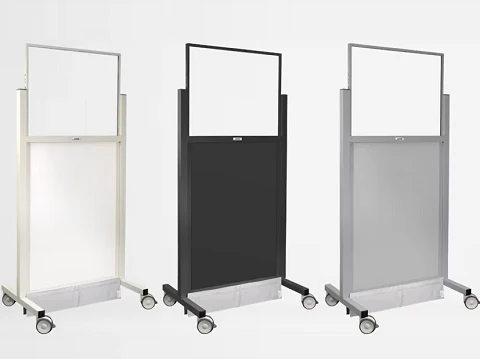
Mobile radiation barriers are designed for facilities that require flexibility.
Unlike fixed shielding systems, these barriers can be moved wherever protection is needed, making them highly useful for temporary imaging setups, shared procedure rooms, renovations, and in-room staff protection.
One of their biggest advantages is operational adaptability. Instead of forcing workflows around permanent construction, mobile barriers allow shielding to move with the staff and equipment.
This makes them especially valuable in compact rooms, evolving facilities, or areas where layouts may change over time.
They also eliminate the need for major construction work, helping facilities improve radiation safety without extensive renovation costs.
Many mobile barriers include lead glass viewing windows, allowing staff to maintain visibility during imaging procedures while remaining protected.
Lead Curtains: Lightweight and Cost-Effective Radiation Protection
Lead curtains are commonly used in lower-exposure environments where flexibility and quick installation are priorities.
They provide a lightweight shielding option that works well for temporary room separation, secondary shielding applications, and spaces where permanent construction may not be practical.
Compared to doors or mobile barriers, lead curtains are easier to install, easier to handle, and more cost-effective for facilities working with lower radiation workloads.
Another advantage is their ability to provide taller coverage in areas where mobile barriers may not fully protect overhead gaps.
Lead curtains can also be customized in different sizes and mounting styles to suit various room layouts and operational needs.
However, they are not suitable for high-exposure environments or primary shielding applications. Their performance depends heavily on selecting the correct lead equivalency and ensuring proper overlap during installation.
When used correctly, lead curtains provide a highly practical solution for flexible and lower-intensity shielding requirements.
Understanding Cost vs Long-Term Value
One of the most common mistakes facilities make is focusing only on initial purchase cost instead of evaluating long-term operational value.
Lead-lined doors generally involve higher upfront investment, but they provide long-term durability, reliable inspection performance, and stable protection over many years.
Mobile radiation barriers offer lower infrastructure costs and greater flexibility, especially for facilities expecting future layout changes or phased expansion.
Lead curtains are usually the most budget-friendly option and work well for lightweight shielding needs and temporary applications.
The best solution is rarely determined by cost alone. It should be based on how the space will function both today and in the future.
Choosing the Right Radiation Shielding Solution
There is no universal shielding solution that works for every facility.
In many projects:
- Lead-lined doors provide the most reliable permanent protection
- Mobile barriers improve workflow flexibility
- Lead curtains solve lightweight and temporary shielding challenges efficiently
The right decision depends on how the shielding system integrates into daily operations, future expansion plans, and radiation safety requirements.
At Almatin, radiation shielding solutions are developed to support healthcare, industrial, and research facilities with practical, compliant, and future-ready protection systems.
If your organization is planning a new radiation facility or upgrading an existing environment, our team can help identify the right shielding strategy for your operational and safety requirements.