Radiography Bunker Design: 7 Key Factors to Consider for Effective Radiation Shielding
Radiography is an essential diagnostic and industrial imaging technique that uses X-rays to produce detailed images. Since X-ray radiation can pass through materials and potentially expose people outside the imaging area, proper radiation shielding is an important part of radiography facility planning.
A properly designed radiography bunker provides a controlled environment for X-ray operations while helping reduce unnecessary radiation exposure to radiographers, patients, visitors and people in adjacent areas.
However, designing an effective radiography bunker is not simply about installing lead sheets on walls. The shielding requirements depend on several technical and site-specific factors.
What Is a Radiography Bunker?
A radiography bunker is a specially designed room or enclosed area where radiography equipment is installed and operated with appropriate radiation shielding.
Depending on the application, shielding may be incorporated into walls, doors, viewing windows, floors, ceilings and other structural elements. The objective is to control radiation levels in surrounding occupied areas.
A radiography room should therefore be planned according to the equipment specifications, expected workload, room layout and surrounding occupancy rather than using a standard shielding thickness for every installation.
Why Is Radiation Shielding Important?
X-ray equipment produces ionizing radiation during operation. While radiography is widely used and valuable for diagnostic and industrial applications, unnecessary exposure should be minimized.
Proper radiography room shielding can help:
- Protect radiographers and other staff
- Reduce radiation exposure in adjacent areas
- Protect visitors and the general public
- Provide a safer working environment
- Support compliance with applicable radiation safety requirements
7 Key Factors in Radiography Bunker Design
1. X-Ray Equipment Specifications
The first step in radiography bunker design is understanding the equipment that will be installed.
Important parameters can include:
- Maximum operating voltage
- X-ray tube characteristics
- Type of radiography equipment
- Expected workload
- Beam direction
- Frequency of use
Different equipment and operating conditions can result in different shielding requirements. Therefore, shielding should be designed around the actual equipment and intended application.
2. Radiation Shielding Calculation
One of the most important aspects of radiography room shielding is determining the appropriate shielding requirements.
Calculations may consider factors such as:
- Workload
- Distance from the radiation source
- Use factor
- Occupancy factor
- Radiation energy
- Location of surrounding occupied areas
These calculations help determine the appropriate shielding approach for primary and secondary radiation barriers.
There is no single universal lead thickness that is suitable for every radiography bunker. Project-specific assessment is essential.
3. Primary and Secondary Barriers
A radiography bunker generally requires consideration of both primary and secondary radiation.
Primary barriers are areas that may receive the direct X-ray beam.
Secondary barriers are designed to address radiation resulting from scattered radiation and leakage from the equipment.
The location and construction of these barriers depend on the equipment layout and expected direction of radiation.
Proper planning helps ensure that shielding is continuous and appropriately positioned throughout the room.
4. Room Layout and Equipment Position
The position of the X-ray equipment can significantly influence radiography bunker design.
The room layout should consider:
- X-ray source position
- Patient positioning
- Control console location
- Beam direction
- Entry and exit points
- Viewing window position
- Adjacent rooms
- Staff movement
The control area should provide appropriate protection while allowing the operator to monitor the procedure.
A well-planned layout can also improve workflow and make the radiography room easier to operate.
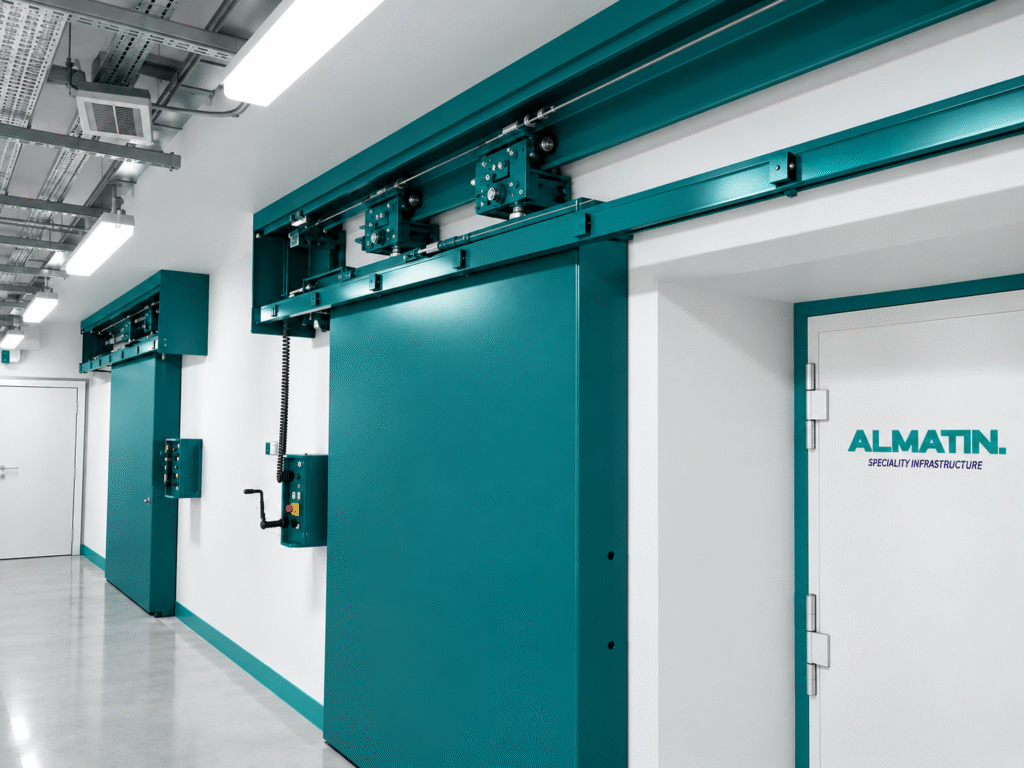
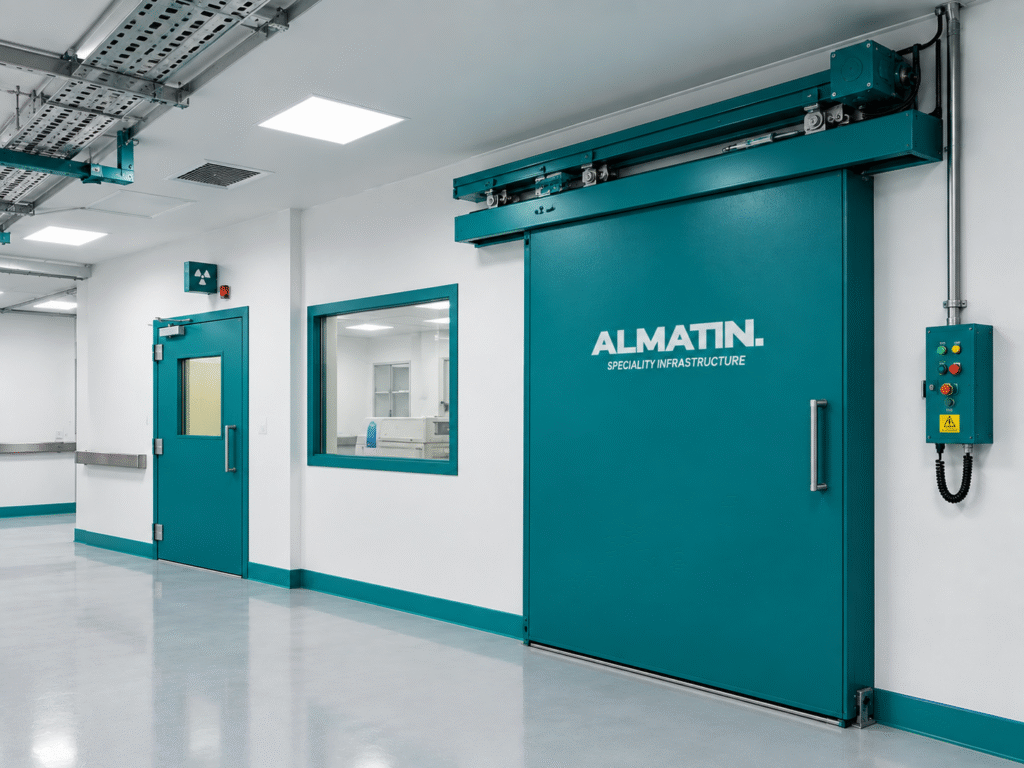
5. Shielded Doors and Viewing Windows
Doors and viewing windows are important components of a radiation-shielded room.
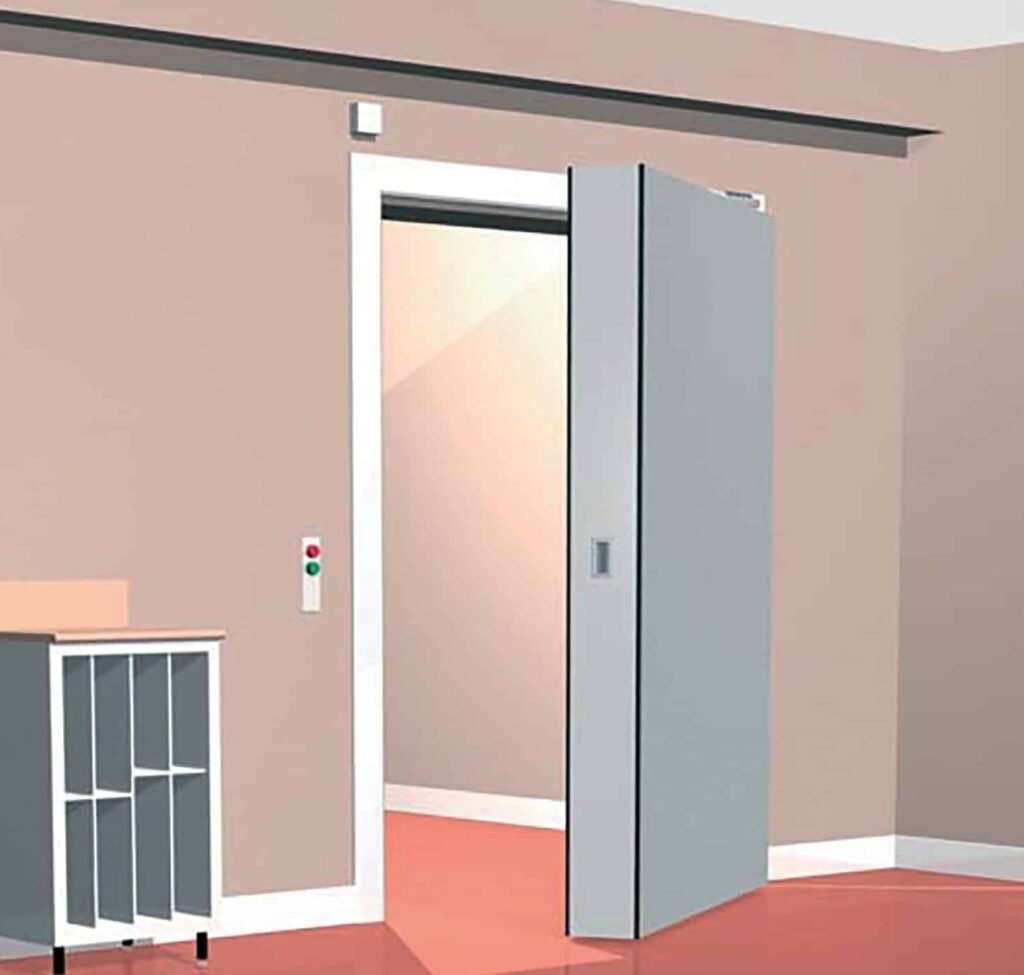
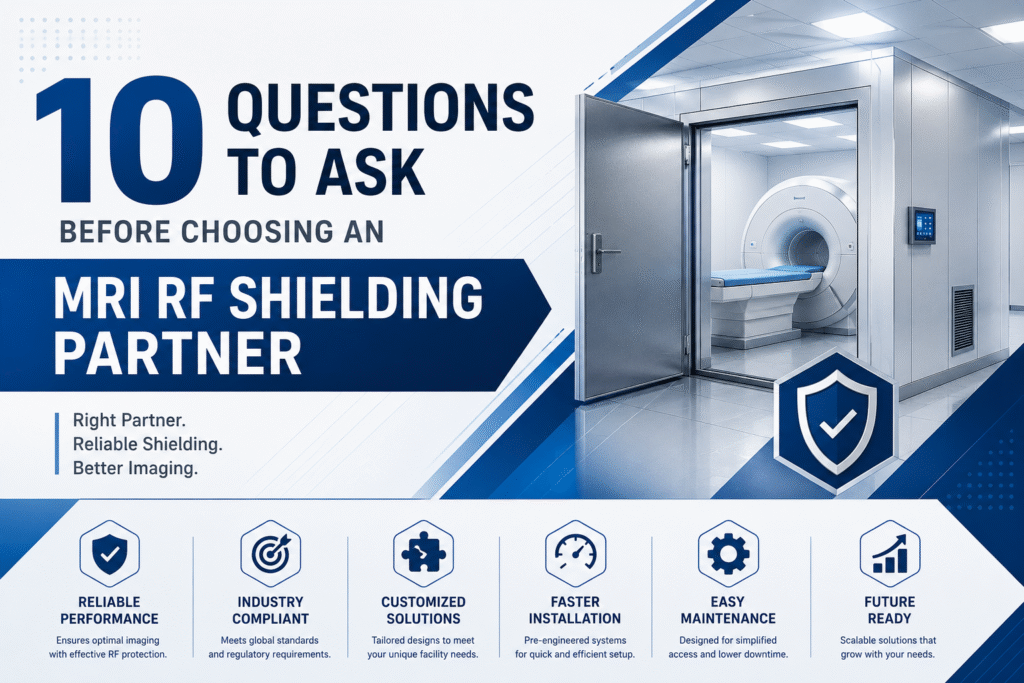
A lead-lined radiography door can provide shielding at the entrance while allowing convenient access to the room. Door design should maintain shielding continuity around the frame and closing areas.
Similarly, a lead glass viewing window can allow operators to observe the examination area while maintaining the required radiation protection.
The shielding performance of these components should be compatible with the overall bunker design.
6. Cable and Service Penetrations
Small openings for electrical cables, pipes, ventilation and other services can become weak points in a shielding system if they are not properly designed.
During radiography bunker construction, service penetrations should therefore be planned carefully.
Shielding continuity should be maintained around:
- Electrical conduits
- Cable openings
- HVAC systems
- Pipes
- Other wall penetrations
Proper detailing of these areas helps avoid unintended gaps in the radiation barrier.
7. Adjacent Area Occupancy
The areas surrounding a radiography room should also be considered during the design stage.
For example, an adjacent area may be:
- An office
- Waiting area
- Corridor
- Storage room
- Staff workspace
- Public area
The expected occupancy and distance of these areas can influence shielding requirements.
This is why a radiography bunker should be designed based on the complete floor plan rather than considering only the room containing the X-ray equipment.
Common Radiography Bunker Design Mistakes
Several issues can affect the effectiveness of radiation shielding if they are overlooked during planning:
- Using the same shielding specification for every project
- Ignoring the location of adjacent occupied areas
- Incorrect placement of primary barriers
- Gaps around doors or viewing windows
- Poorly planned cable penetrations
- Insufficient consideration of equipment workload
- Installing shielding without proper calculations
- Failing to conduct appropriate radiation safety testing
A detailed assessment before construction can help minimize these problems.
Radiography Bunker Construction Process
A typical project can involve the following stages:
1. Site Assessment
Review the proposed room, surrounding areas and building layout.
2. Equipment Assessment
Understand the X-ray equipment and expected operating conditions.
3. Shielding Calculation
Determine project-specific shielding requirements.
4. Material Selection
Select suitable shielding materials and components.
5. Installation
Install shielded walls, doors, viewing windows and other required elements.
6. Quality Inspection & Testing
Inspect shielding continuity and conduct applicable radiation safety checks.
This systematic approach helps create a radiography room that is designed around the actual application rather than a generic specification.
Radiation Safety and AERB Considerations in India
For radiography facilities in India, radiation safety planning should consider the requirements and guidance applicable to the specific installation, including those of the Atomic Energy Regulatory Board (AERB).
Project requirements can vary depending on the equipment, application and facility. Therefore, shielding design should be developed by qualified professionals based on the applicable regulatory and technical requirements.
Why Professional Radiography Bunker Design Matters
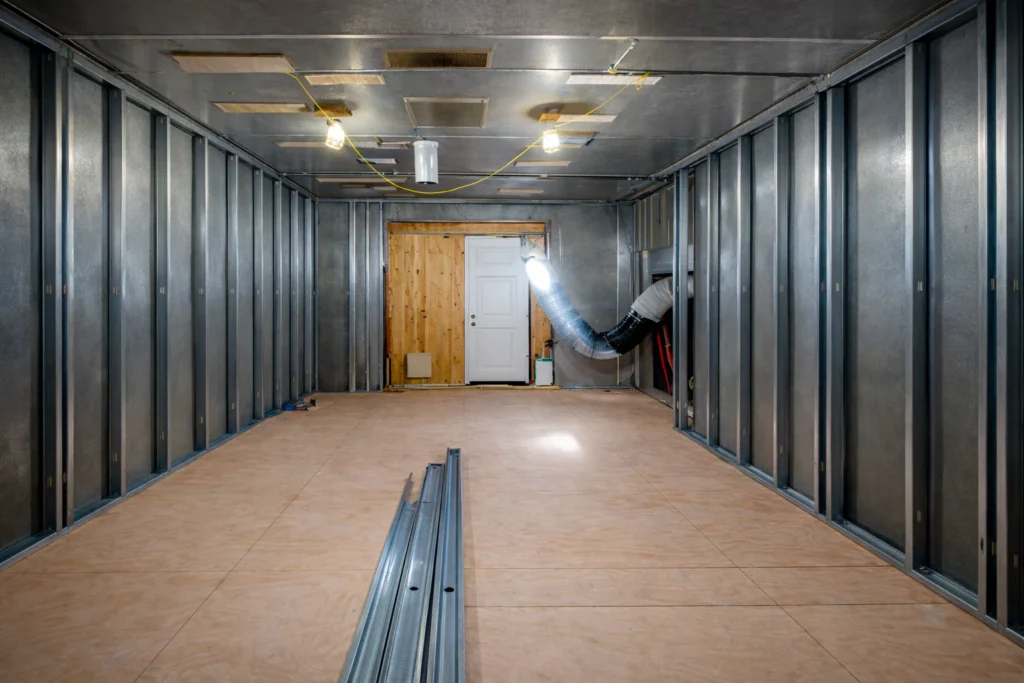
A radiography bunker is an integrated radiation-shielding system. Walls, doors, viewing windows, ceilings, floors and service penetrations all need to work together as part of the overall design.
Professional planning can help ensure that the shielding strategy is aligned with the equipment, workload, room configuration and surrounding occupancy.
Conclusion
Effective radiography bunker design requires more than selecting a shielding material. Equipment specifications, radiation calculations, room layout, primary and secondary barriers, doors, viewing windows, service penetrations and surrounding occupancy all need to be considered together.
For healthcare and industrial radiography facilities, project-specific planning and professional installation can help create a safer and properly designed radiation-shielded environment.
Almatin Speciality Infrastructure Pvt. Ltd. provides radiation shielding solutions for radiography and other radiation-related facilities, including shielded doors, viewing windows and associated shielding systems.
Planning a radiography bunker or radiation-shielded facility? Contact Almatin for project-specific radiation shielding solutions and installation support across India.