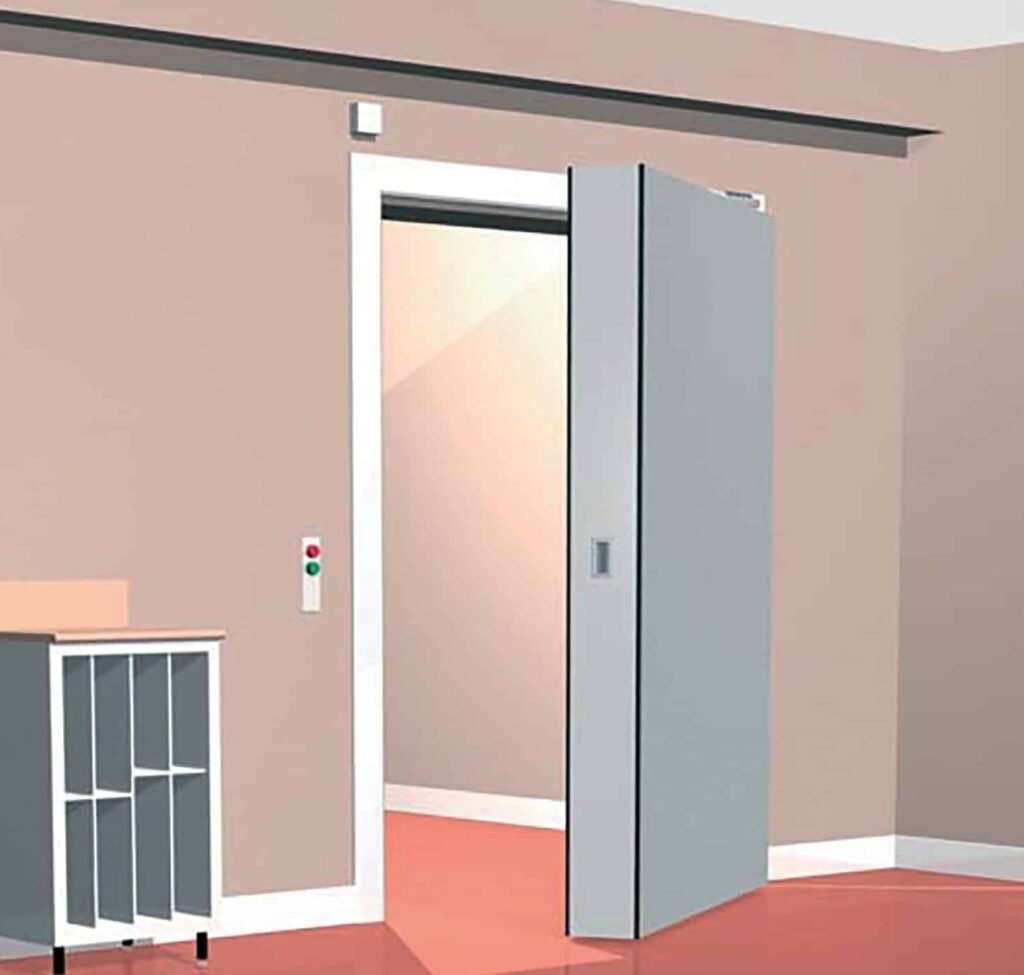
LINAC Bunker Door: Types, Shielding Requirements, Design & Selection Guide
Modern radiotherapy has transformed the way cancer treatment is delivered. Linear Accelerators, commonly known as LINACs, allow medical professionals to deliver highly precise radiation doses to targeted areas while minimizing exposure to surrounding healthy tissue.
However, the high-energy radiation generated during LINAC operation also makes radiation protection an essential part of treatment facility design. A radiotherapy bunker must be carefully engineered to prevent radiation from reaching adjacent occupied areas, and every part of the shielding envelope matters.
One of the most important components at the entrance of the treatment room is the LINAC bunker door.
A LINAC bunker door is not simply a heavy-duty hospital door. It is a specialized radiation shielding system designed to form part of the overall protective barrier around the treatment room. Its shielding performance, mechanical construction, dimensions and operating mechanism must be considered alongside the bunker walls, ceiling, floor and entrance configuration.
This guide explores the role of LINAC bunker doors, their different configurations, shielding considerations, design requirements and the key factors healthcare facilities should consider before selecting a manufacturer.
What Is a LINAC Bunker Door?
A LINAC bunker door is a radiation-shielded entrance door specifically designed for a Linear Accelerator treatment room.
During radiotherapy, a LINAC generates high-energy X-rays or electron beams that are directed toward the patient. Although the treatment beam is precisely controlled, radiation can also be scattered or generated in other directions. The treatment bunker therefore requires appropriate shielding to protect staff, patients and people in surrounding areas.
The bunker itself generally consists of substantial shielding barriers, while the entrance needs a door system capable of maintaining the required shielding performance when closed.
Depending on the project, LINAC bunker doors may use high-density shielding materials and specially engineered construction methods to achieve the required attenuation. The final design is determined by the specific radiation protection requirements of the facility rather than by a universal door specification.
This makes the bunker door an important part of the overall radiation shielding strategy.
Why Is a Specialized Door Required for LINAC Bunkers?
A conventional architectural door is designed primarily for access, privacy, security and environmental separation. It is not designed to provide the radiation attenuation required around a high-energy radiotherapy treatment room.
The entrance to a LINAC bunker can therefore become a potential weak point if the door is not properly engineered.
A specialized LINAC bunker door is designed to maintain continuity between the shielding provided by the surrounding structure and the entrance itself. This involves more than selecting an appropriate shielding material. The door, frame, joints, overlaps and surrounding interfaces all need to be considered as part of the complete shielding assembly.
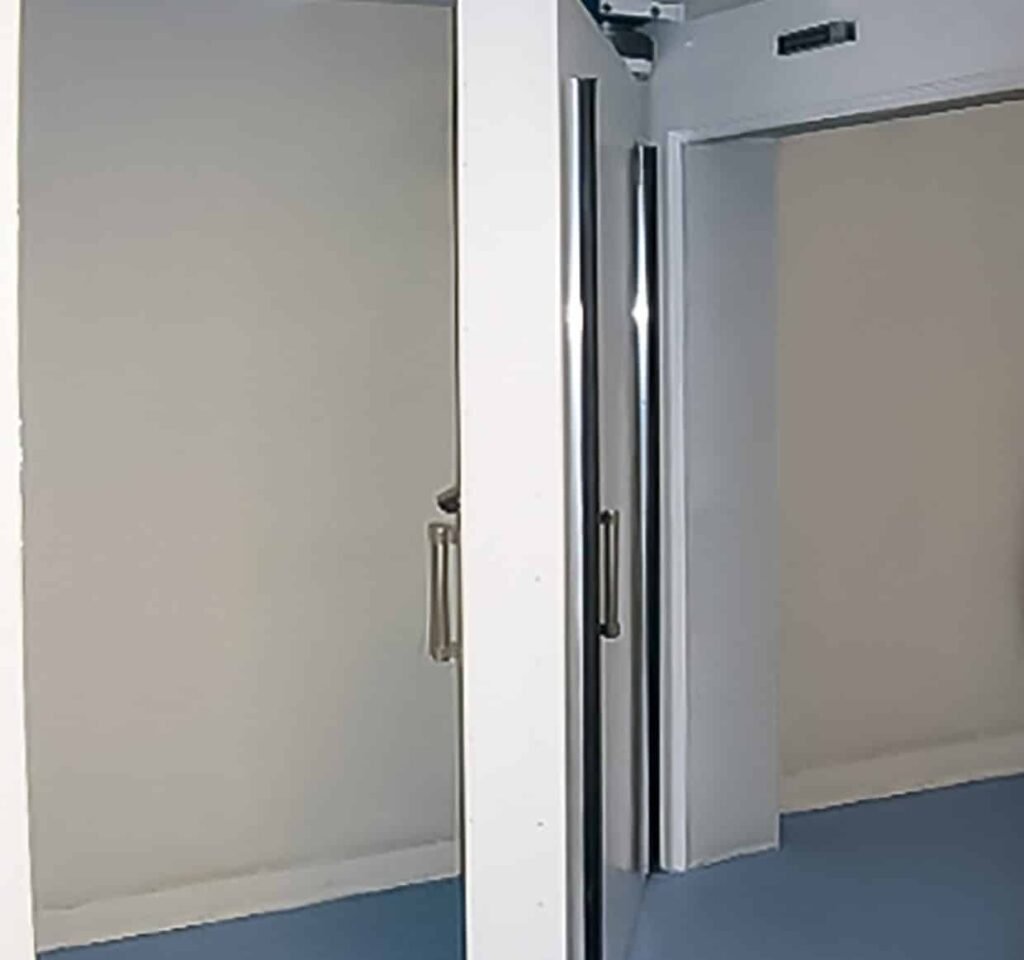
How Does a LINAC Bunker Door Provide Radiation Shielding?
The basic purpose of radiation shielding is to reduce radiation intensity to levels appropriate for areas outside the treatment room.
A LINAC bunker door achieves this attenuation through a combination of shielding material, thickness, geometry and construction. Depending on the project requirements, high-density materials such as lead or steel may be incorporated into the door assembly.
However, the required shielding cannot be determined simply by choosing a standard thickness.
Types of LINAC Bunker Doors
The appropriate door configuration depends on the bunker layout, available space, shielding requirements, door dimensions, operational workflow and the weight of the finished assembly.
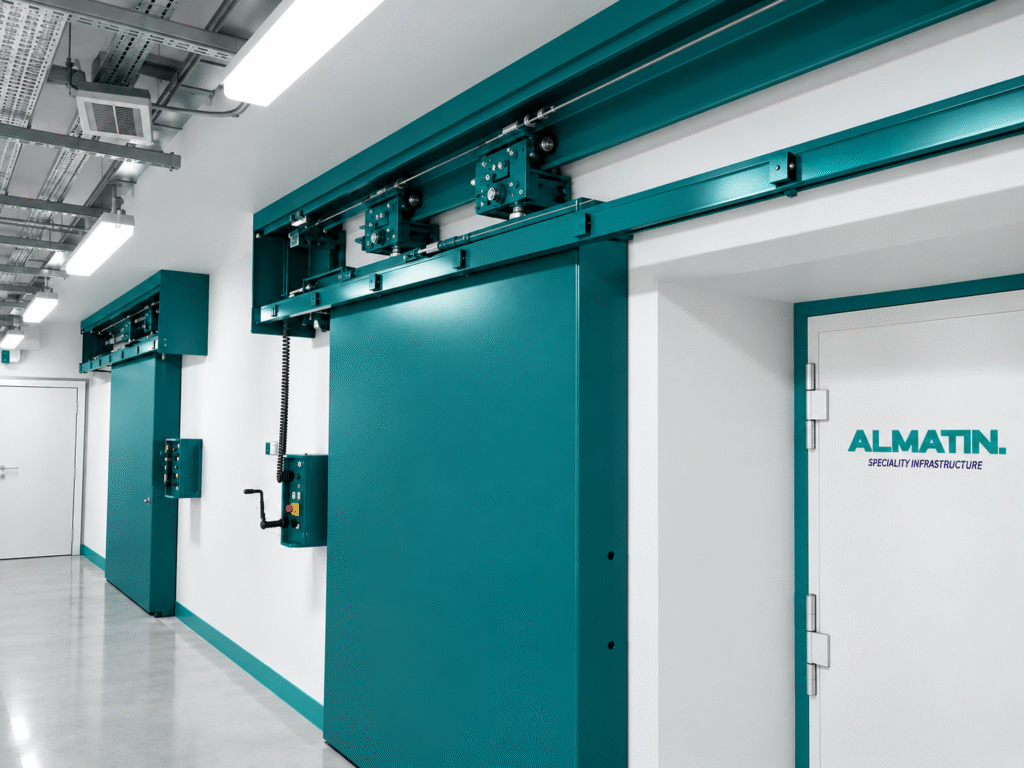
Sliding LINAC Bunker Doors
Sliding doors are commonly considered for LINAC bunkers where the entrance requires a large shielded door assembly.
Instead of swinging into the surrounding area, the door moves horizontally along a guided mechanism. This can make sliding configurations particularly useful where floor space or clearance is limited.
Because radiation shielding can make the door substantially heavier than a conventional door, the track, rollers, supporting structure and drive mechanism must be engineered to handle the complete assembly safely and reliably.
Sliding bunker doors can be designed for either manual or motorized operation depending on the requirements of the facility.
Hinged LINAC Bunker Doors
Hinged configurations operate around a fixed pivot and can be considered where the bunker layout provides sufficient clearance for the door to swing.
The primary engineering challenge with a heavily shielded hinged door is its weight. Hinges, frames, supports and locking mechanisms must be capable of handling repeated operation without compromising alignment.
Hinged solutions can be appropriate for certain bunker layouts, particularly where the entrance dimensions and available space make this configuration practical.
Automated LINAC Bunker Doors
Automated bunker doors use powered mechanisms to move the shielded door, reducing the physical effort required from operators.
Automation can be particularly useful in high-throughput radiotherapy facilities where the bunker entrance is used frequently throughout the day.
Depending on the design, automated systems may incorporate motorized drives, position sensors, safety sensors, emergency controls and interfaces with the facility’s control or safety systems.
Common Applications of LINAC Bunker Doors
LINAC bunker doors are primarily used in facilities where Linear Accelerators are installed for radiation therapy.
These include hospitals, dedicated cancer treatment centres, oncology departments, medical colleges, specialized radiotherapy facilities and private healthcare centres.
They may be incorporated into newly constructed treatment bunkers as well as certain renovation or upgrade projects, depending on the existing structure and the requirements of the radiation protection design.
Because every facility has different equipment, room dimensions and operating conditions, the door should be engineered according to the requirements of the individual project.
Why Choose a Specialized LINAC Bunker Door Manufacturer?
A LINAC bunker door is a specialized radiation shielding product that sits at the intersection of healthcare infrastructure, radiation protection and mechanical engineering.
Choosing a manufacturer with relevant experience can make a significant difference to the overall project. An experienced supplier should be able to understand the project’s shielding requirements, coordinate door dimensions with the bunker layout and engineer the mechanical system around the weight and operating requirements of the final assembly.
The manufacturer’s capabilities in customization, fabrication, installation, testing and after-sales support should also be considered.
At Almatin Speciality Infrastructure Pvt. Ltd., radiation shielding solutions are developed for specialized healthcare and radiation environments. The company provides solutions designed around the technical and operational requirements of individual projects, helping healthcare facilities address their radiation protection and infrastructure needs.
Conclusion
A LINAC bunker door is a critical component of a radiotherapy treatment facility. Its role extends beyond simply providing access to the treatment room; it forms part of the radiation shielding barrier that helps protect staff, patients and people in surrounding areas.
The right door configuration depends on the bunker layout, LINAC characteristics, shielding calculations, available space, operational requirements and long-term maintenance considerations.
Whether a facility requires a sliding, hinged or automated solution, the door should be engineered as part of the overall bunker shielding design rather than treated as an independent architectural product.