Neutron Shielding: How to Protect People and Equipment from Neutron Radiation
Most people have heard of X-ray and gamma shielding. Lead aprons, thick concrete walls and heavy doors are familiar sights. Neutron radiation is a different problem. It behaves differently, it penetrates differently, and the materials that stop X-rays often do very little against it. That is why neutron shielding is its own discipline, and why getting it wrong can be costly and dangerous.
This guide explains what neutron radiation is, how shielding works, which materials perform best, and what to consider when designing a protected space.
What Is Neutron Radiation?
Neutrons are uncharged particles found in the nucleus of an atom. Because they carry no electrical charge, they do not interact with the electrons in matter the way X-rays or gamma rays do. They pass through dense material easily until they collide with an atomic nucleus.
Neutron radiation comes from several sources:
- Nuclear reactors and research reactors
- Particle accelerators and cyclotrons
- Neutron generators used in industry and well logging
- Spent fuel storage and transport
- Medical facilities using proton therapy or high-energy linear accelerators
- Spontaneous fission sources such as californium-252
Neutrons are also a secondary hazard. When they strike certain materials, they can make those materials radioactive, a process called neutron activation. This is why shielding design has to think about what the shield itself will become, not only what it blocks.
Why Lead Alone Does Not Work
Lead is excellent against gamma rays and X-rays because of its high density. Against fast neutrons, it is surprisingly poor. A neutron does not lose much energy bouncing off a heavy lead nucleus, much like a ping-pong ball hitting a bowling ball. It simply ricochets away with most of its energy intact.
Effective radiation shielding against neutrons needs a different strategy, one that works in stages.
How Neutron Shielding Works: The Three-Step Approach
A well-designed neutron shield usually does three jobs.
1. Slow the neutrons down (moderation). Fast neutrons lose energy most efficiently when they collide with particles of similar mass. Hydrogen is the ideal partner, since a hydrogen nucleus is almost the same mass as a neutron. This is why hydrogen-rich materials such as water, polyethylene and concrete are the backbone of neutron shielding.
2. Absorb the slowed neutrons (capture). Once neutrons are slow, or thermal, they can be captured by elements with a high absorption cross-section. Boron and cadmium are the best known. Boron-10 is especially popular because it captures neutrons without producing high-energy gamma rays.
3. Block the secondary gamma rays. Neutron capture and scattering often release gamma radiation. A final layer of high-density material, usually lead or steel, deals with this secondary radiation.
This is why professional shielding is almost always a layered or composite design rather than a single material.
Common Neutron Shielding Materials
Borated Polyethylene
Borated polyethylene is among the most widely used neutron shielding materials. Polyethylene supplies the hydrogen needed to slow neutrons, while the added boron captures them. It is lightweight, easy to machine, and available in sheets, blocks and panels, which makes it practical for retrofits and modular construction. Boron content typically ranges from about 5% to 30% by weight, depending on the application.
Concrete
Neutron shielding concrete is a classic choice for permanent structures. Its water content provides hydrogen, and special mixes add boron or heavy aggregates such as barite or magnetite. Concrete is structural and economical for large installations like reactor buildings and accelerator vaults, but it is bulky, and walls often need to be one to several metres thick.
Water
Water is cheap, abundant and hydrogen-rich. It is used in spent fuel pools and reactor pools, where it shields neutrons and also cools the fuel. The trade-off is containment and maintenance rather than shielding performance.
Boron Carbide and Cadmium
Boron carbide is extremely effective at absorbing thermal neutrons and is used in control rods, shielding panels and specialized containers. Cadmium sheets are excellent absorbers too, but toxicity concerns have reduced their use in favour of boron-based products.
Hydrogen-Rich Composites and Resins
Newer products blend epoxy or other polymers with boron compounds. These can be cast into complex shapes, which suits custom equipment housings and detector enclosures.
Key Factors in Neutron Shielding Design
Choosing a material is only the beginning. Engineers and facility planners weigh several factors.
Neutron energy spectrum. Fast, intermediate and thermal neutrons need different treatment. A shield optimised for one may underperform for another.
Source strength and geometry. The activity of the source, its distance from occupied areas, and its location all change the thickness required.
Regulatory dose limits. Designs must keep occupational and public exposure within national limits, applying the ALARA principle (As Low As Reasonably Achievable).
Space and weight. Hospitals, laboratories and industrial plants often have floor-loading limits and tight footprints. Compact shielding such as borated polyethylene can be a better fit than massive concrete.
Activation and waste. Some shielding materials become radioactive over time. Planning for decommissioning and disposal early avoids expensive surprises later.
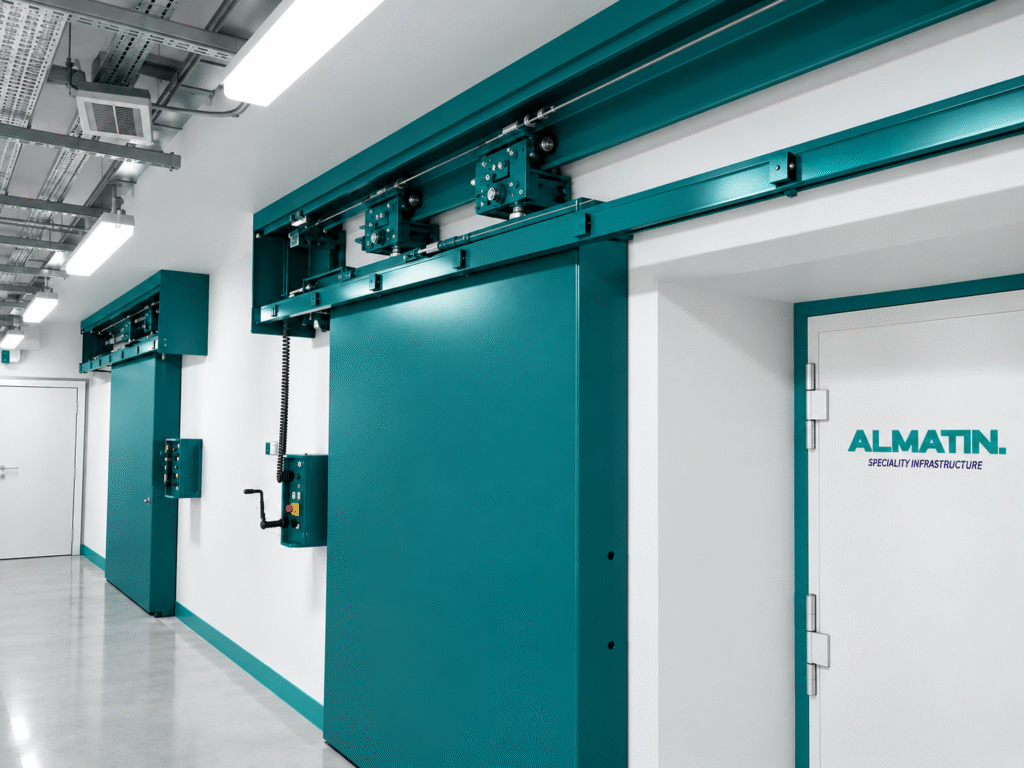
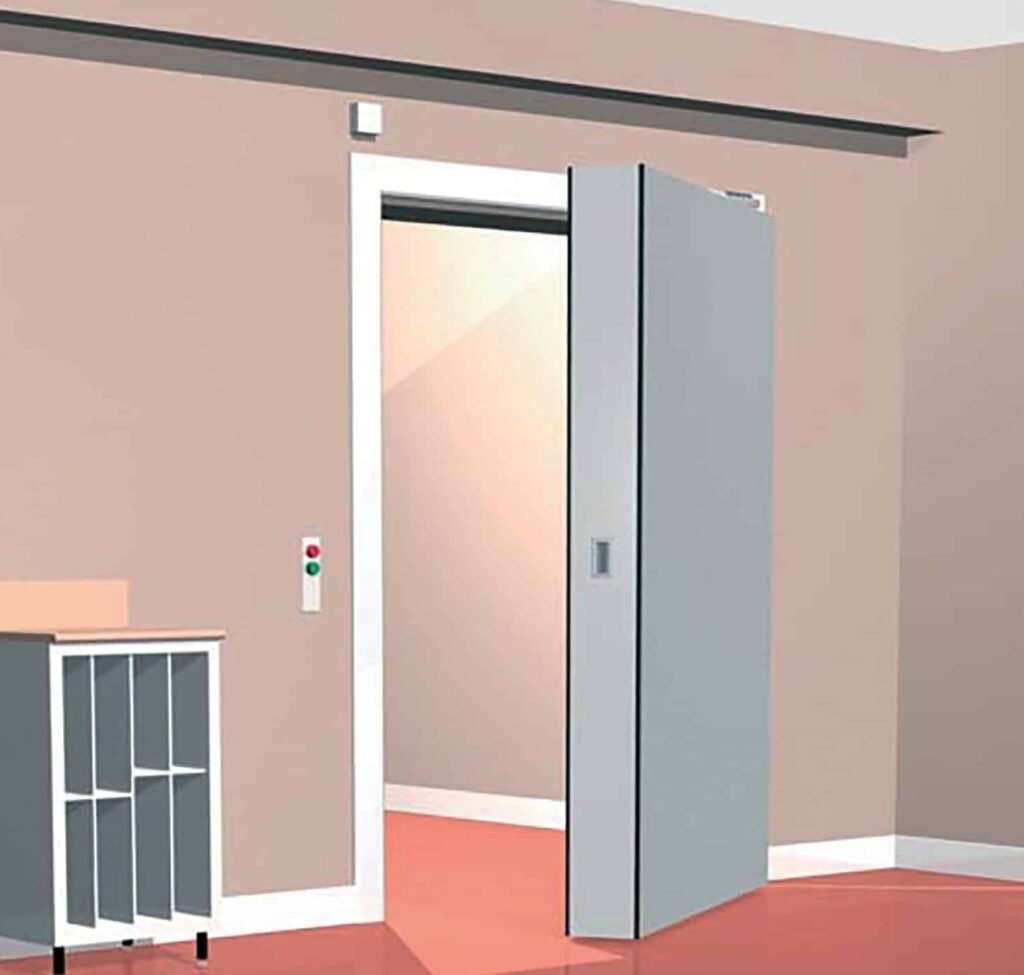
Penetrations and joints. Doors, ducts, cable conduits and seams are where leakage commonly occurs. Labyrinth entrances, stepped joints and shielded door systems are used to prevent streaming of neutrons through gaps.
Where Neutron Shielding Is Used
Nuclear power and research reactors. Biological shields, spent fuel storage, and transport casks all rely on neutron attenuation.
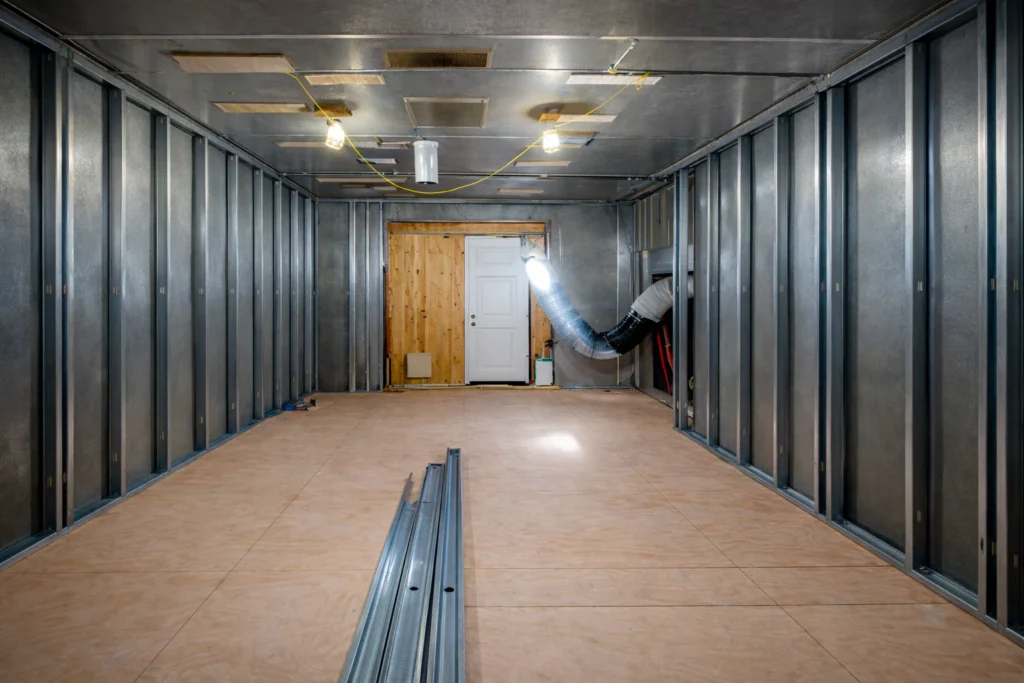
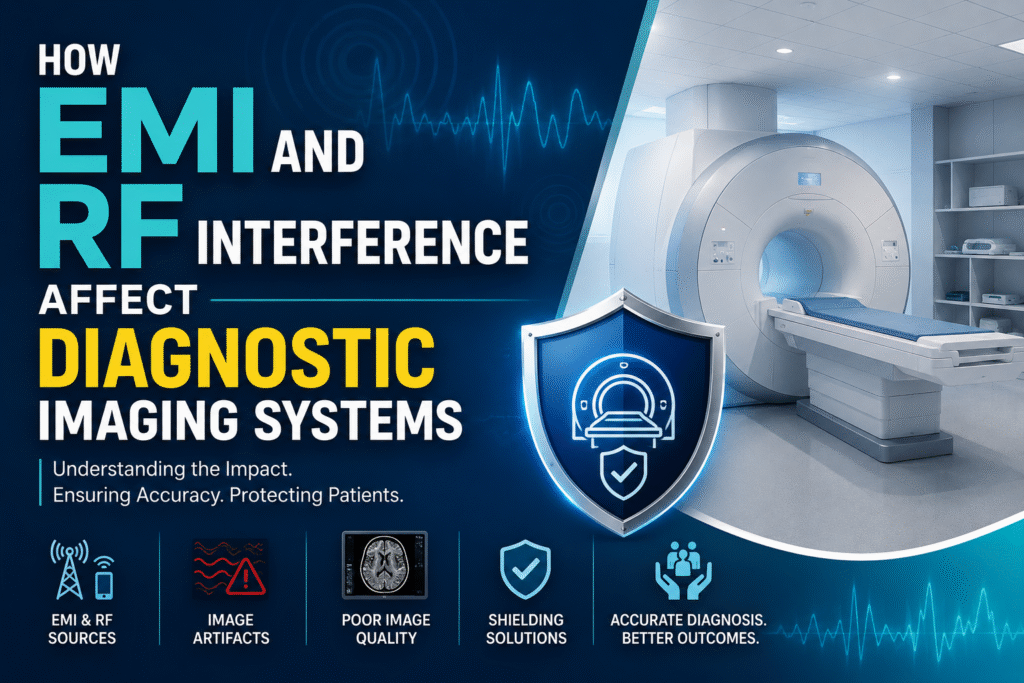
Healthcare and proton therapy. Treatment rooms where high-energy beams are used generate neutrons, so walls, ceilings and doors must be designed accordingly. Medical planners already familiar with RF shielded rooms for MRI will recognise the same principle: every opening is a potential weak point.
Industrial and oil & gas. Neutron generators and sealed sources used in well logging and material analysis require shielded storage and handling.
Aerospace and defence. Equipment and crews exposed to cosmic and secondary neutron radiation need lightweight protective solutions.
Research and academia. Neutron scattering facilities, particle accelerators and radiochemistry labs depend on carefully engineered shielding.
Common Mistakes to Avoid
After two decades of writing about technical industries, the same mistakes keep appearing in project discussions:
- Treating neutron shielding like gamma shielding. Using only lead leaves fast neutrons largely unaffected.
- Ignoring secondary radiation. Capture gamma rays can undo the benefit of a neutron absorber if no gamma layer is included.
- Overlooking joints and openings. A perfect wall with a poorly shielded door is a poorly shielded room.
- Skipping verification. Surveys and dose measurements after installation confirm that the design performs as calculated.
- Buying on price alone. Cheap, uncertified materials with inconsistent boron content can fail silently.
How to Choose the Right Neutron Shielding Solution
Start with a clear picture of your source: type, energy, strength and operating schedule. Bring in a qualified radiation physicist or shielding engineer early, since the cost of redesign after construction is far higher than the cost of good planning. Ask suppliers for material certifications, boron content data, and performance test results. Finally, plan for inspection and maintenance, because shielding is a safety system that has to keep working for decades.
Final Thoughts
Neutron shielding is a precise, layered science. The right combination of hydrogen-rich moderators, neutron absorbers and gamma barriers can reduce exposure to safe levels in even the most demanding environments. Whether you are designing a hospital treatment vault, a research lab or an industrial storage facility, understanding these fundamentals will help you ask better questions and make better decisions.