MRI RF Shielding vs Conventional Room Construction: What's the Difference?
Magnetic Resonance Imaging (MRI) systems are among the most sensitive diagnostic technologies used in healthcare today. Their ability to produce high-quality images depends not only on the scanner itself but also on the environment in which it operates. One of the most critical aspects of MRI infrastructure is RF shielding, which protects the system from electromagnetic interference and ensures accurate imaging.
When planning an MRI facility, healthcare providers often face an important decision: should they opt for conventional room construction or invest in a modular MRI RF shielding system?
Understanding the differences between these two approaches can help hospitals and diagnostic centers make informed decisions that deliver long-term value, efficiency, and reliability.
Understanding Conventional MRI Room Construction
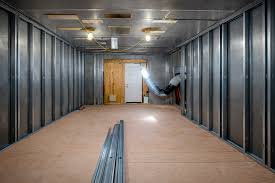
Traditional MRI room construction typically involves extensive civil work and multiple on-site processes. Walls, ceilings, floors, and shielding components are installed and integrated during construction. While this approach has been widely used, it often requires longer installation periods and depends heavily on site conditions and workmanship.
Modifications or upgrades in the future can also become complex and time-consuming, leading to higher costs and operational disruptions.
What is Modular MRI RF Shielding?
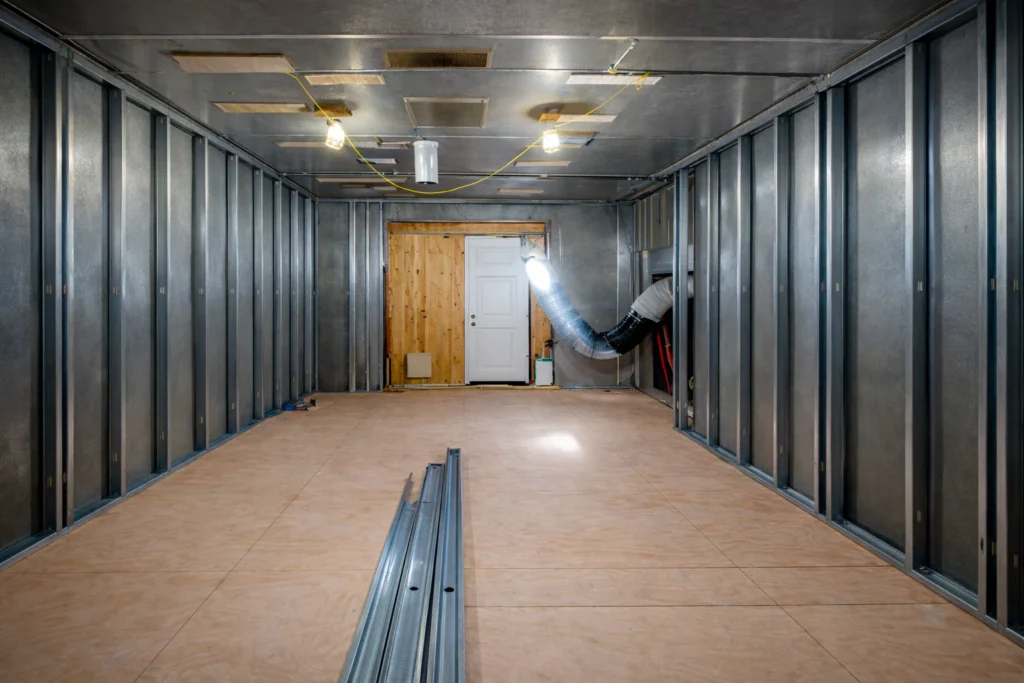
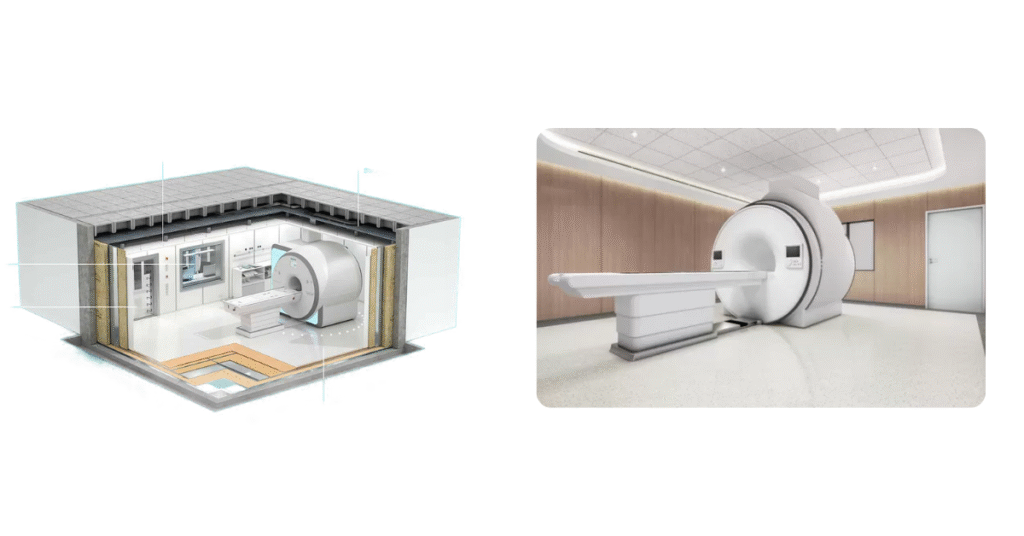
Modular MRI RF shielding is a modern approach designed to simplify the construction process. These systems are precision-engineered and manufactured in modular sections that can be assembled quickly at the project site.
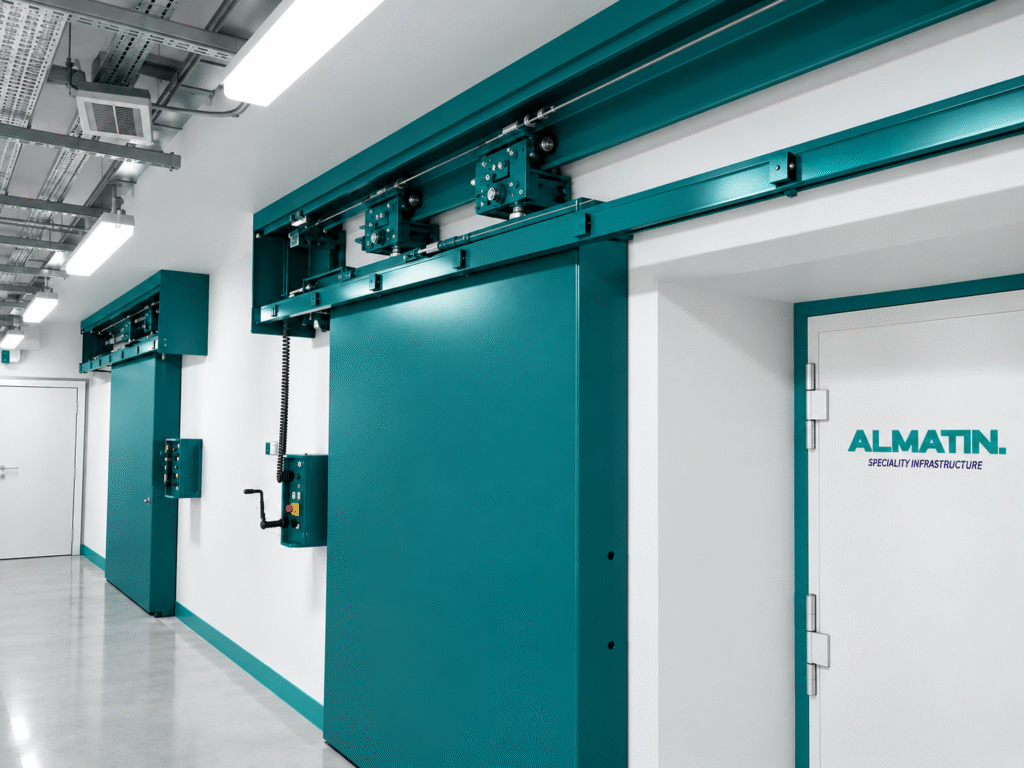
Components such as RF shield panels, RF doors, windows, waveguides, and filter interfaces are designed to work seamlessly together, creating a highly effective electromagnetic barrier that protects MRI systems from external interference.
This approach provides consistent performance while offering flexibility for future expansion and upgrades.
Performance and Shielding Reliability
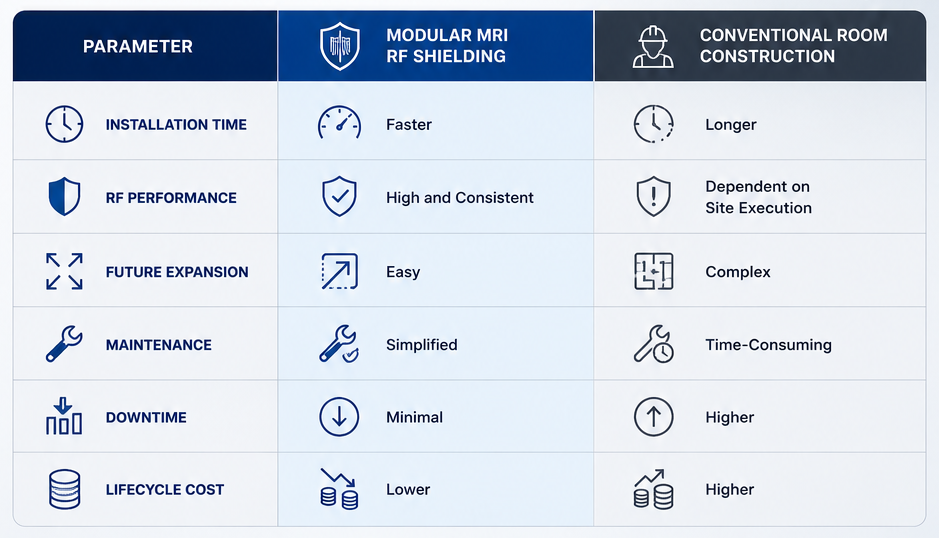
MRI image quality relies heavily on eliminating electromagnetic interference. Conventional construction methods often depend on the quality of on-site execution, which can lead to inconsistencies in shielding performance.
Modular MRI RF shielding systems, on the other hand, are manufactured with precision and tested to meet stringent standards. This ensures reliable RF attenuation and creates an optimal environment for accurate diagnostic imaging.
Consistent shielding performance translates into improved image quality, reduced artifacts, and enhanced patient care.
Installation Time and Project Efficiency
Time is a critical factor for healthcare facilities. Longer construction periods can delay operations and increase project costs.
Conventional room construction typically involves multiple trades and extensive civil work, resulting in longer installation timelines.
Modular MRI RF shielding systems are pre-engineered for rapid installation. Since many components are manufactured before reaching the site, assembly becomes faster and more efficient. This significantly reduces project completion time and enables hospitals to start operations sooner.
Flexibility and Future Expansion
Healthcare infrastructure must adapt to evolving technologies and changing operational requirements.
Conventional room structures can be difficult to modify once completed. Any upgrades often require substantial reconstruction and increased downtime.
Modular shielding systems offer greater flexibility. Additional components can be incorporated more easily, and modifications can be carried out with minimal disruption. This makes modular systems ideal for facilities planning future upgrades or expansion.
Maintenance and Downtime
Maintenance plays a significant role in the overall performance and lifespan of MRI infrastructure.
Traditional construction may require extensive repairs involving civil work and prolonged interruptions.
Modular systems simplify maintenance by providing easier access to individual components. Repairs and replacements can often be completed with reduced downtime, ensuring uninterrupted operations and improved productivity.
Lifecycle Cost and Long-Term Value
Initial construction costs tell only part of the story. Long-term maintenance, upgrades, and operational downtime all contribute to the total cost of ownership.
Although conventional room construction may appear economical at first, future modifications and maintenance can significantly increase expenses.
Modular MRI RF shielding systems offer lower lifecycle costs due to easier maintenance, faster upgrades, and reduced downtime. This results in better return on investment and long-term operational efficiency.
Building Future-Ready MRI Infrastructure
Healthcare providers today require infrastructure that delivers performance, flexibility, and long-term reliability. Modular MRI RF shielding systems provide a smarter alternative to conventional construction by combining precision engineering with faster installation and future scalability.
At Almatin, we specialize in advanced MRI RF shielding solutions designed to meet the highest standards of performance, compliance, and operational efficiency. Whether you’re planning a new MRI suite or upgrading an existing facility, our modular shielding systems help create reliable imaging environments built for the future.